Sometimes the Amstrad community gets a lovely surprise. Sometimes it gets an enormous one.
This week, Sir Alan Sugar, the man behind Amstrad, shared a post on X linking to The Retro Hour podcast episode featuring UKAG founding member Jo Cook, along with this very UK Amstrad Group website. For a community built on enthusiasm, nostalgia, practical tinkering and a huge amount of shared history, that is a rather special moment.
The Retro Hour said of the tweet in a direct message:
“You’re not going to believe this one.”
And we almost didn’t until we saw it with our own eyes!
Podcast celebrating 42 years of the Amstrad CPC with special guest Jo Cook, who takes us deep inside the Amstrad scene of the late 80s and 90s. From growing up with a CPC464 and helping run the legendary King Arthur’s Domain PD library and Merline-Serve, to writing for Amstrad… pic.twitter.com/6lDNpjO1SH
For UKAG, this is fantastic promotion. We already know how much affection there still is for the Amstrad CPC, PCW, PC, GX4000 and the wider Amstrad range, but having Lord Sugar himself acknowledge the podcast and the UKAG website puts that enthusiasm in front of a much wider audience.
It is also a reminder of why UKAG exists.
Beyond the 80s
The Amstrad story didn’t end when the original machines left the shelves. It carried on through the people who bought them, coded on them, repaired them, wrote about them, swapped disks, ran clubs, made friends, and kept the scene alive.
Today that same spirit continues through online communities, modern hardware projects, archive work, repairs, new software, events, meetups and good old-fashioned chat about why these machines still matter.
UKAG was created to bring those people together. So, to everyone who has followed the link, listened to the podcast, found the website, joined our WhatsApp community, bought a meetup ticket, or simply thought “I had one of those!”… we welcome you to our little retro corner.
To Lord Sugar, thank you for giving the Amstrad community a very welcome boost. We promise not to let it go to our heads too much, although we may need a little lie down. We hope you are happy to see your creations live on, through enthusiast owners such as our group, as well as our events.
The Amstrad scene is still here. Still friendly. Still busy. Still wonderfully enthusiastic. And now, thanks to one very well-timed post, a few more people know about it. We’ll see you at our event, coming up very soon!
Now, Sir Alan, how about a CPC Mini, we reckon that would really sell…
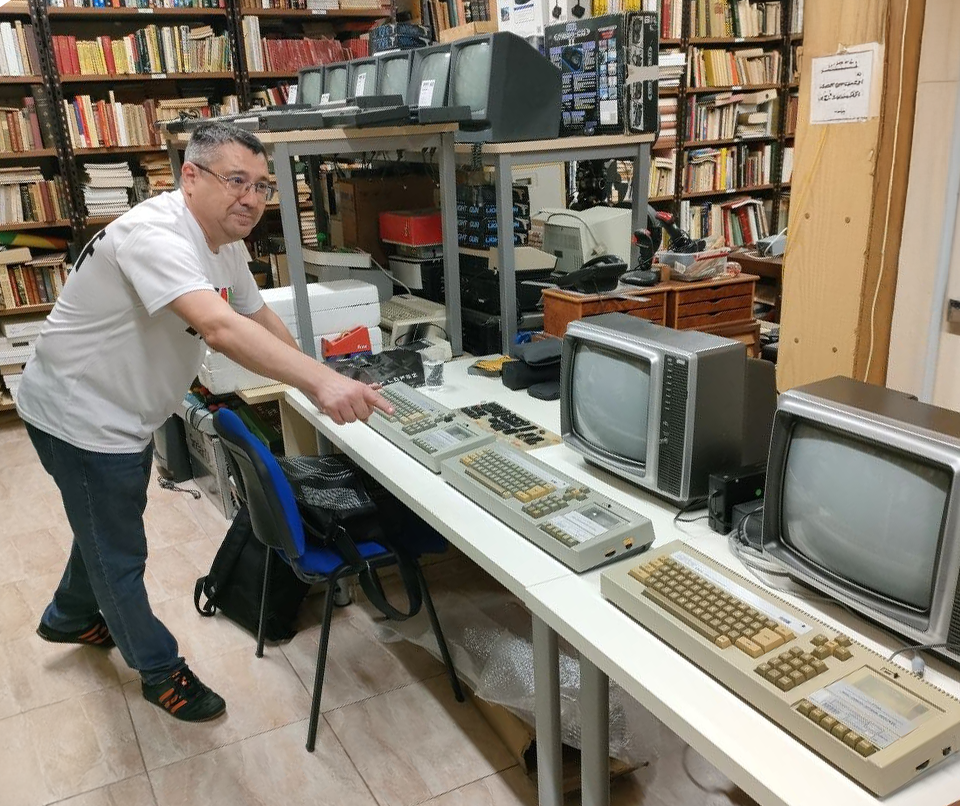
AUA is a group of friends and enthusiasts of retro Amstrad machines from the 1980s. We started as a Facebook group around 2017, as a meeting point for users interested in this system and the possibilities of these machines.
The Amigos y Usuarios de Amstrad (Friends and Users of Amstrad) support all initiatives related to the development of new hardware, software, and anything connected to this system.
Within this framework, cooperative projects have been carried out such as DES (Dandanator Entertainment System), as well as support for other smaller, but equally important, initiatives.
We also collaborate with other retro computing events such as:
We participate and provide our machines so that everyone can enjoy, remember, and play with them again.
Given how we experience modern technology today, with flat screens, always-connected mobile devices, computers, and all the technology around us, we must not forget where it all comes from: the first mass-market home computers of the 1980s.
As retro enthusiasts, we also want to showcase new video games and hardware expansions, and demonstrate that these machines do not need to be discarded if found at home. We can encourage people to recover and revive them using modern hardware and today’s active scene. This is not just a passing trend—quite the opposite.
Our events
AUA began in 2019 with the Run”AUA event, organized at La Casa+Grande in Rivas-Vaciamadrid, with support from various media outlets that helped promote it.
Attendance was immediate, and we had a very enjoyable day with more than 20 AMSTRAD systems on display, where people could enjoy games, programs, and these magical machines from the 1980s. We were also joined by the Association of Classical Computing Users, who brought several systems for exhibition.
At the 2024 RetroAlacant event, we had over 70 Amstrads between Amstrad CPC (all versions), Schneider CPC, PCW, PC, NC and Mega PC and at the 2025, three CPC64 protos + PCW sample case and some documentation… Three Amstrad CPC464 prototypes in the same event 🙂
Our events include the following sections:
– Repair Workshop: We repair, solder, replace memory modules, floppy disk drive belts, and most importantly, we bring your Amstrad back to life. – Game competition in a real machine. – WorkShop about expansions, like DES, Dandanator, M4. – Machine exhibitions. – Book, hardware and Games presentations about Amstrad machines or another retro computers.
Association
AUA was legally established as an association in 2024 and currently has seventy-five members, not counting Roland Perry who is member number zero and an honorary member.
Jo Cook recently joined the Retro Hour podcast for a warm, funny and nostalgic conversation about her history with Amstrad, her involvement in the scene, and how those early experiences still connect with what UKAG is doing today.
For anyone who remembers waiting for a tape to load on a CPC 464, admiring colourful game box art in high street shops, or discovering that computers could be about far more than just games, this episode will strike a chord.
The conversation covers Jo’s earliest Amstrad memories, her role in the community, the story behind Merline-Serve and King Arthur’s Domain, writing for Amstrad Action, and the way the retro scene continues to bring people together.
From a CPC 464 in the corner of the bedroom
Jo’s first computer was an Amstrad CPC 464. Like many people who grew up with home computers in the 1980s, those memories are about much more than the games themselves. They are about the rituals, the anticipation, the sounds, the box art and the feeling that these machines opened up a much bigger world.
More than games
One of the themes that comes through strongly in the podcast is that Amstrad was never just about gaming. Jo talks about the wider Amstrad range too, including machines like the PCW, NC100 and NC200, and the 6128 Plus, which she especially loved for its keyboard and writing-friendly feel.
The conversation is a good reminder that for many users, Amstrad represented productivity, creativity and experimentation as much as entertainment.
That broader view of home computing is one of the things that makes the episode so enjoyable. It is not just nostalgia for games, but for an era when computers felt full of possibility.
King Arthur’s Domain and Merlin Serve
A particularly fascinating part of the interview is Jo’s account of King Arthur’s Domain and Merline-Serve. Her father, Arthur, was the more technical half of the operation, handling repairs and electronics, while Jo became heavily involved in cataloguing, writing letters, answering the phone and helping run the day-to-day side of things. Together, they built what became a much bigger part of family life than anyone probably expected.
It was community-led, practical and rooted in generosity, even if it also helped fund the family’s own computing habit. Listening to Jo describe it now, it is clear just how much of that work was really about helping people.
Writing, reviewing and finding a voice
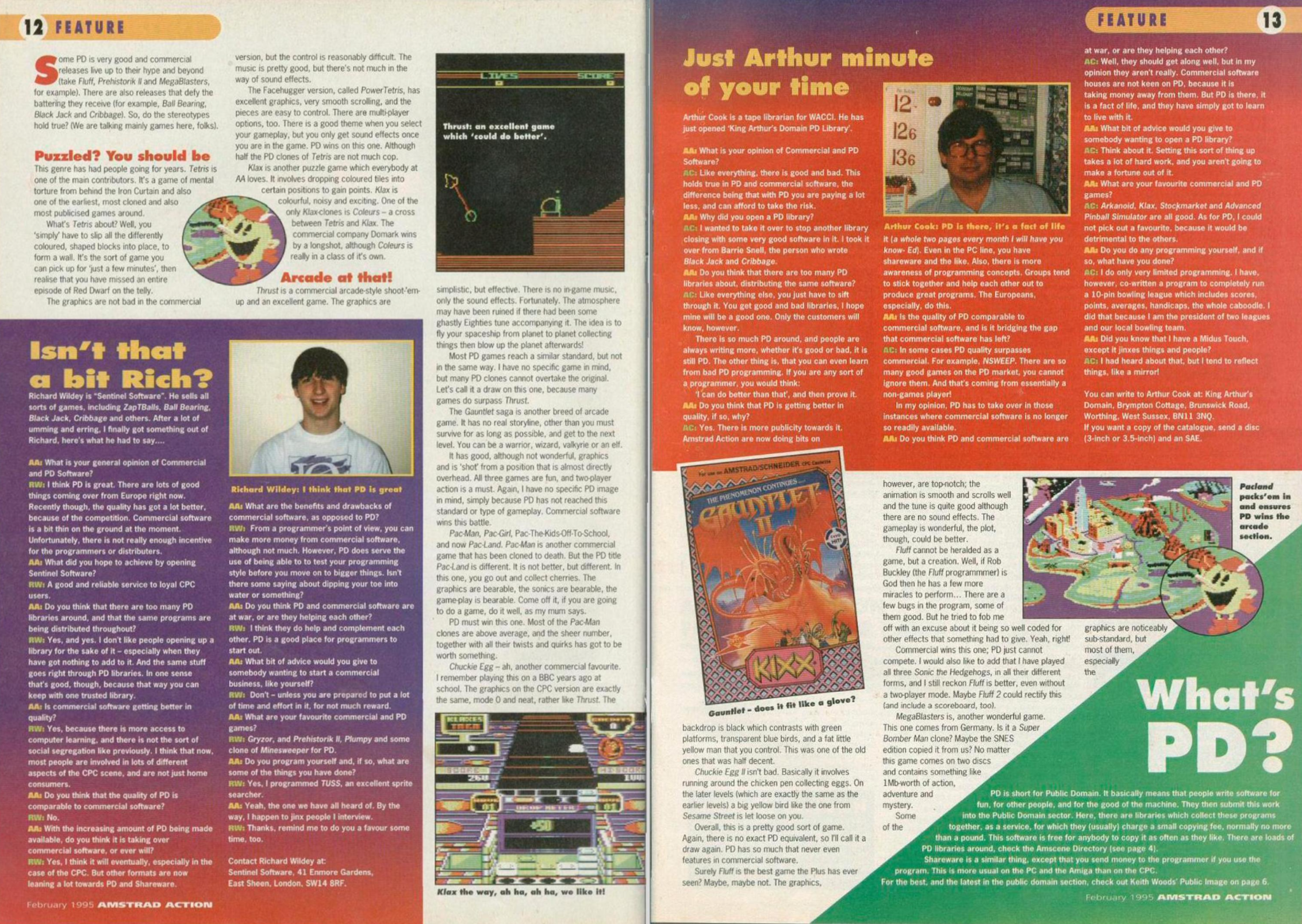
The interview also explores how Jo’s involvement in the Amstrad world helped launch her writing career. She wrote for fanzines including WACCI, interviewed people, reviewed software and gradually found her way into magazine work.
There is something lovely in hearing how those early experiences shaped her future. Even then, the interest was not only in the technical side, but in making things understandable, telling people’s stories and helping others get more from the tools in front of them, and that thread runs right through to the work she does today.
The power of community
Another standout thread in the discussion is community. Jo talks about conventions, user groups, fanzines and the people who made the Amstrad scene what it was. That same spirit is part of what sits behind UKAG now. What started as a few friends getting together with their machines and memories has grown into something much bigger: a welcoming group for Amstrad fans, retro enthusiasts and the simply curious.
The upcoming UKAG event is part of that same tradition, bringing people together to share stories, show off projects, repair machines, play games and enjoy a bit of collective memory-lane wandering.
Why this conversation is worth a listen
What makes this Retro Hour podcast episode especially enjoyable is that it is not just a bit of Amstrad history, it’s a personal story about growing up with computers, finding confidence, building community, and discovering interests that last a lifetime.
For anyone with a fondness for Amstrad, retro computing, or the wider home computer culture of the 1980s and 1990s, it is well worth a listen. And for anyone planning to join UKAG in June, it offers a perfect reminder of why these machines, and the communities around them, still matter.
If you love retro Amstrad, enjoy chatting with fellow enthusiasts, or just want to be around people who understand why these machines still matter, the UKAG WhatsApp community is the place to be.
The UK Amstrad Group is all about bringing together people who share a love for the Amstrad scene. That means the computers, the games, the magazines, the memories, the hardware projects, the collecting, the repairs, and all the brilliant conversations that come with them. Our WhatsApp community gives you an easy way to be part of that, wherever you are.
So what is it?
It is a friendly space to share what you are working on, ask questions, show off new finds, swap stories, and chat about all things retro Amstrad. Whether you are a long-time CPC, PCW or PC user, a returning fan rediscovering your old machine, or someone who has only recently fallen down the wonderfully pixelated rabbit hole, you will be very welcome.
You might be discussing favourite games one minute, hardware fixes the next, and then suddenly be deep in conversation about cover tapes, green screen monitors, or which joystick was really the best.
The WhatsApp group is also one of the best ways to keep up with what UKAG is doing, including our upcoming meetup. Our first official UKAG meet is shaping up to be a fantastic day for Amstrad fans, with a chance to meet fellow enthusiasts in person, including CPC architect Roland Perry, chat, play, share memories, and celebrate the community around these much-loved machines.
Online communities are brilliant, but there is something special about meeting people face-to-face who share the same enthusiasm. The meetup is a chance to put names to faces, see some great machines and projects, and enjoy a day surrounded by people who really get it. The WhatsApp community helps build that sense of connection before the event even begins, so by the time you arrive, you already feel part of it and know who’s who!
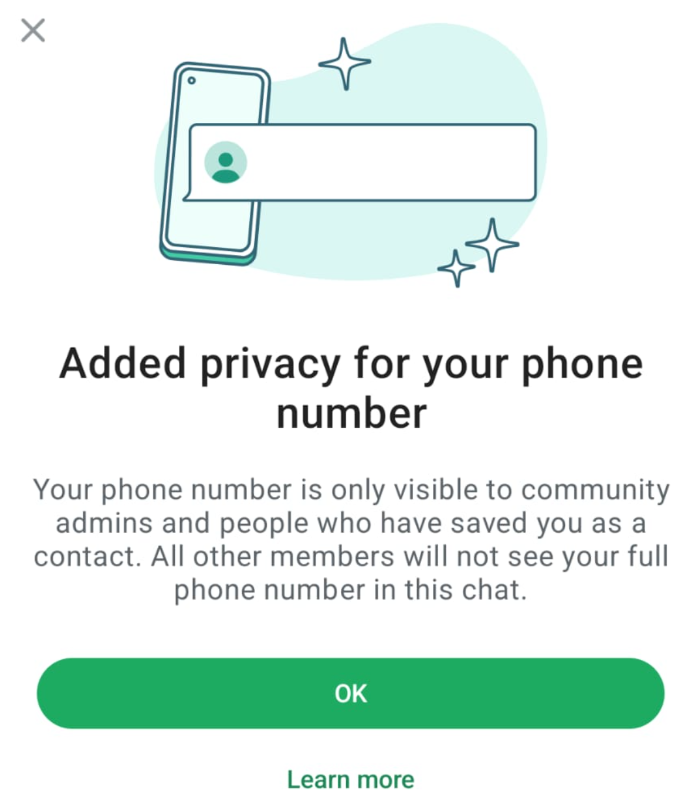
If you are concerned about privacy, please note that phone numbers aren’t shown to all members:
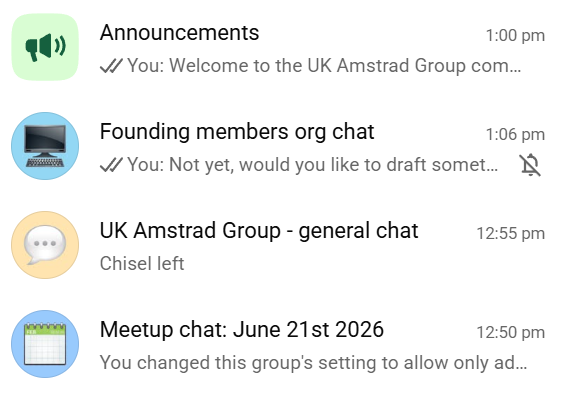
If you’ve never used a WhatsApp community before, no worries! Once you join you’ll be in the UK Amstrad Group – general chat for all sorts of conversation.
At the top of WhatsApp select the UKAG logo:
This then shows a menu of other groups you can join.
Founding members org chat is for boring stuff behind the scenes, but the Meetup chat is to discuss more specifically around the event. And lookout for other groups to come along in the future.
My earliest memories of computing is having the CPC 464 and waiting for tapes to load. I would have been about 6 or 7 years old in 1984, using the computer in the corner of my parent’s bedroom. We had the colour screen and I loved playing Oh Mummy and Harrier Attack that came with it. I remember Animal Vegetable Mineral, which guessed something you were thinking of. As a child that felt like AI does to me these days.
Obviously being young I was mostly playing computer games with my younger brothers. One particular favourite was Gauntlet and Gauntlet II… two-player mode getting to level 99 or something and the computer crashing. Such pain. Other favourite games where Chuckie Egg, Klaxx, Rainbow Islands, Boulderdash and I’m sure more that will ping in my brain when I see them somewhere.
“I’m 13 and want to be a journalist”
As I got a bit older, I started using it more functionally. I remember doing the type-ins and my stepdad helping me to write a prime number generator in BASIC. I think that’s probably my best ever bit of programming!
Merline-Serve for all your CPC needs
Things started to accelerate when I was helping my dad with what grew from a hobby into an obsession. He was good at repairing electronics, and we started buying people’s items and reselling them. That grew and grew and became something dad and I did together.
Jo’s dad, Arthur Cook
My dad’s name was Arthur, and ran a PD library that became known as King Arthur’s Domain. So our buying and selling effort became known as Merline-Serve. That was Merlin with an “e” to make it the feminine form as I was really the everyday person that dealt with people and the logistics side of things.
In theory Merline-Serve wasn’t a non-profit, but all the money went back into the hobby, buying more stock and enabling us to get to conventions to sell things. This included the CPC Southwest convention and the WACCI Conventions at Walsall football stadium. My computer use at this time was for cataloguing what we were selling, writing letters and all sorts. My dad and I even did an evening GCSE together in Computer Studies, both passing with the same grade. I remember writing a DBASE III database for our stock.
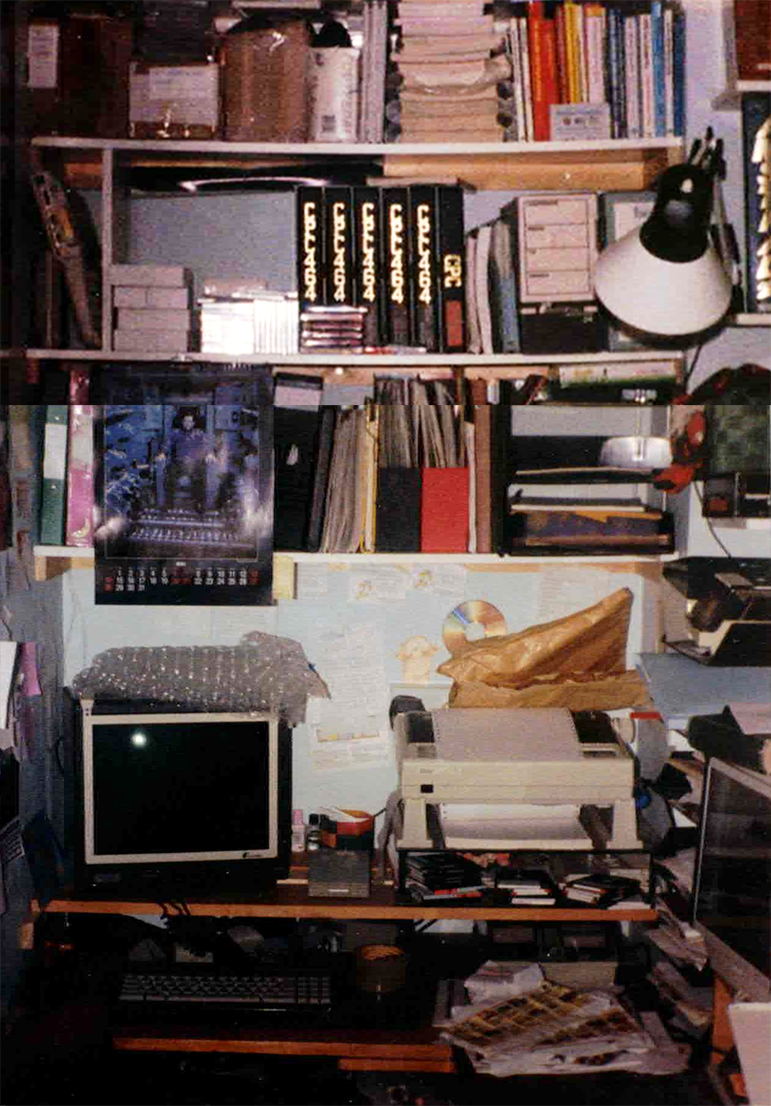
Jo’s CPC 6128, with Plus computer just about visible on the right
The start of things
It was around this time I knew I wanted to write. The first ever thing I got published was for WACCI fanzine, the first sentence was something like: “I’m 13 and want to be a journalist.” It came true; at 19 I studied magazine journalism at the prestigious Highbury College, became deputy editor of a magazine in the learning and development field a few years ago, and now I’m editor of its latest iteration as a content website.
Back to teenage me: I wrote for various fanzines and got involved in speaking to various companies about competitions and computer fayres and stuff I can’t really remember in that much detail now. One distinct memory was a company returning a call about something I was trying to find out about, only to be dismayed that I couldn’t speak to them because I was at school! I guess in those days it was all a bit weird that kids were using computers and doing things.
Whilst I was technical in a lot of ways, at school I was more than comfortable using the BBC computers that were in all UK schools, and we even had some PCWs too, I wasn’t into the electronics or programming side of things. I focused more on software use and the people. I did some interviews (including with Rob Buckley of Radical Software) and I got into writing game reviews and even a terrible short story. I cringe now when I look back at all of my writing, but of course at the time it felt amazing to be contributing to something and have my work published.
Amstrad Action magazine
The way I got to writing for Amstrad Action was through being friends with Rob Buckley and getting to know Simon Forrester and Dave Goldberg. Another embarrassing memory is sending hand written astrology backgrounds to them both, one of them was a taurus seems to be fixed into my memory. Rob Buckley was a programmer and, if memory serves me correctly, they hired him to write the BASIC programming page, but he was rubbish at deadlines. So I helped him with the writing and timing and he focused on the programming. From there I offered other reviews and got a fair few things published (listed at the end).
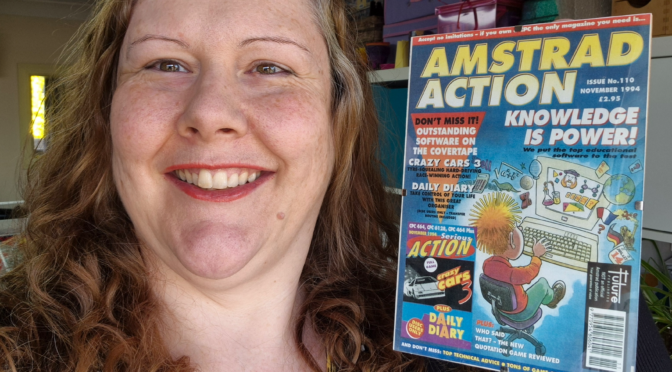
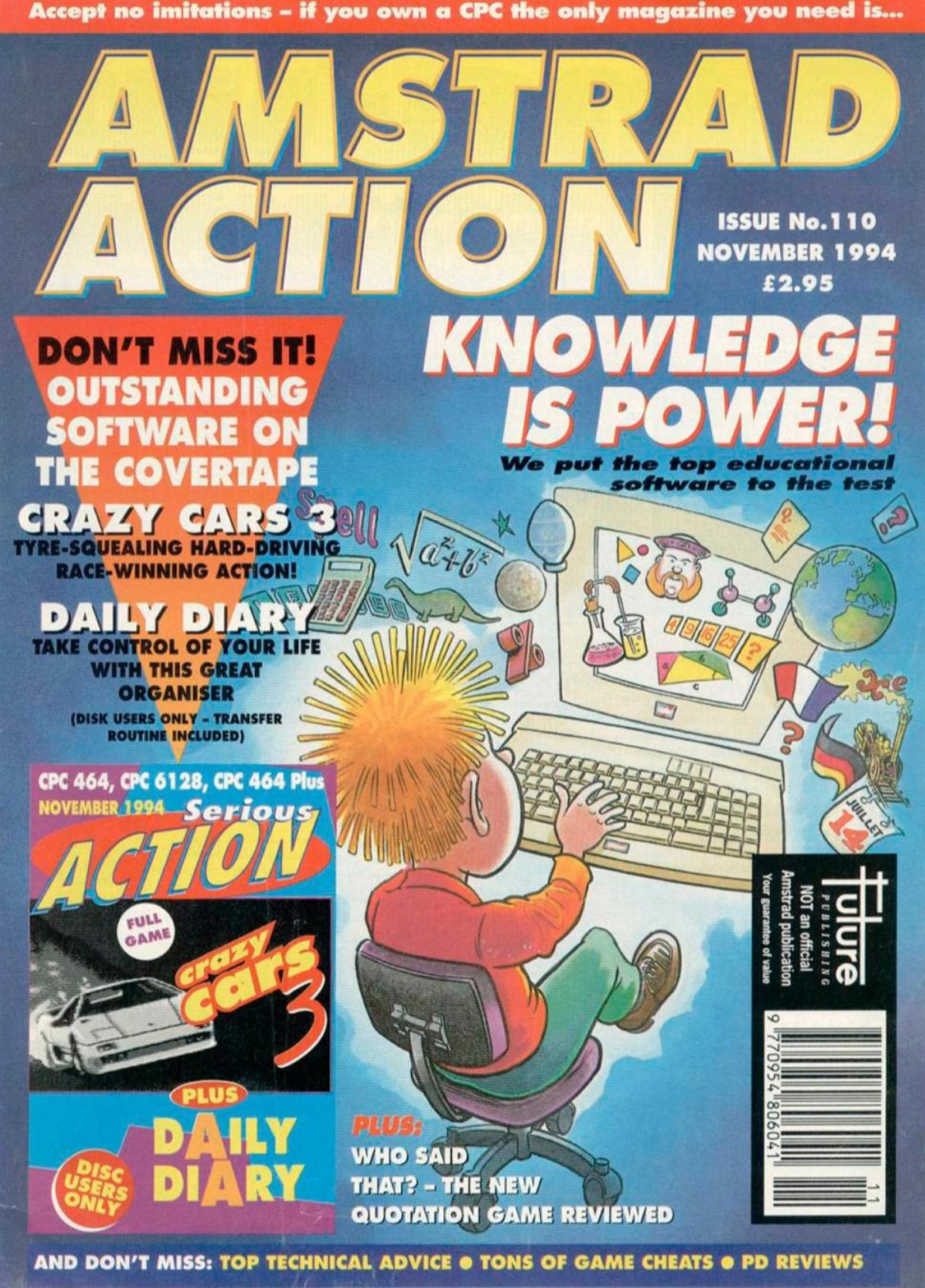
I wrote for Amstrad Action the first time when I was about 15 or so. I remember the day I received my GCSE exam results was also the day Amstrad Action issue 108 arrived in the post with my first ever published article. I’ve never lost the buzz of seeing my name in print, which of course these days extends to website content, social media and videos, podcasts, reports and the like.
At the time I was published under my given name Angela Cook. Joann is my middle name and these days I’m known as Jo. The lightbulb part comes from my own company name, Lightbulb Moment, which is about loving the ‘aha’ moment when people are learning something new.
I really enjoyed writing different features, which is where my strengths were, rather than the more technical elements, though I got into teaching networking and server building much later. I also loved the art work back in the mid-90s for magazines, even more so when my feature made the cover art.
Writing for AA at that time I think gave me my own identity. Until then it had been very much wrapped up with my dad, running Merline-Serve. That was great, I learned a lot and have some very fond memories of going round to people’s houses and buying things, cataloguing them, speaking to people on the phone and all sorts. But now this was about me being my own person in the CPC scene and fulfilling dreams about being published.
On and on
I did a few other things after this, including marketing and selling, or trying to, titles from Radical Software. I think I got involved in some other things here and there, but again it’s lost to a memory these days. I wish I’d kept my files and taken more photo’s.
Radical Software advert in AA117, yes, the last one!
I wrote for Micro Mart, PC Mart and other publications outside the computer industry. Doing what I had from such a young age gave me not only a lot of experience and practical skills, but a huge confidence in what I was doing and where I was going that.
When I look at my career for the past 30 years, I can trace it all back to that choice of Amstrad rather than an Amiga or Spectrum. Even my love life is related to it, as my other half is Simon “Doc” Green. Simon ran PD libraries, did some coding, and worked on BTL along with Richard Fairhurst, myself and others and that’s how I met him. One of my earliest memories of Simon is about 1996 at the WACCI convention, where he though the 256k silicon disc I was selling was too expensive!
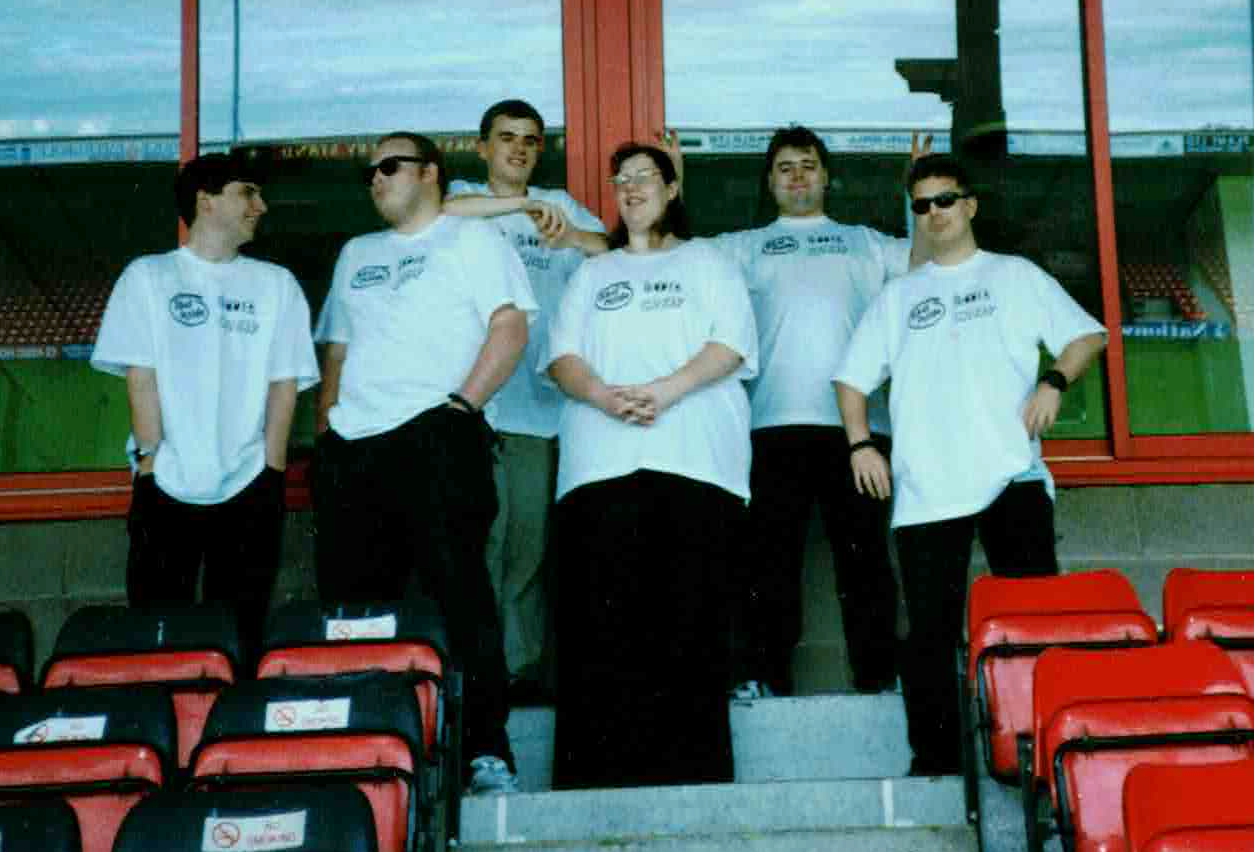
The BTL crew at the WACCI convention circa 1997 L-R Richard Wildey, Simon Green, Richard Fairhurst, (Angela) Jo Cook, Rob Scott, Simon Matthews
The Amstrad community to me was about being with friends, having a laugh and sharing your learning with others. It’s not lost on me that I now work in the learning and development industry, and that’s the same, a lot of friendly sharing. CPC architect and UKAG honorary president Roland Perry has said how the “community was friendly” on the Retro Hour Podcast (59 minutes in).
Back then, it was more than just owning a computer. The different “scenes” as they were called had some rivalry, but mostly within it was helping people, going to conventions, having great conversations and camaraderie. I almost couldn’t understand it when people didn’t get any one of the great magazines or weren’t part of a club – what did they do with their computer!?
In the 2000s I wasn’t involved in the Amstrad scene a lot. Almost the opposite as, quite sadly, my dad had hoarded a lot of computer stuff over the years and it became a bit of a problem. We eventually sorted that out, with a lot of it coming back home with me as Simon was still very much enjoying his retro hobby.
My dad’s AAs at The Cave
Simon then donated my dad’s entire Amstrad Action and Amstrad Computer User collection to The Cave at The Retro Collective. We went up there a while ago and it was odd: I had to wear gloves for the magazine archive, where, in my head, I was just flicking through dad’s old mags and seeing my childhood address on the cover. It’s a fitting tribute now that my dad has passed away.
Back to the future
In the last few years I’ve really enjoyed reminiscing about my time with Amstrads and the other computers we were using, which these days are just old tech. The UKAG meetings we’ve hosted have been great fun for the sights and sounds that bring back such memories. It’s also been good fun to going to places such the Play Expo in Blackpool, including helping out with some of the speaking sessions, and meeting retro celebrities.
I’m proud of being a tiny cog for my contribution to the Amstrad scene at the time, since then it’s an even smaller part. But the Amstrad’s part in my life is huge and I’m loving it’s resurgence.
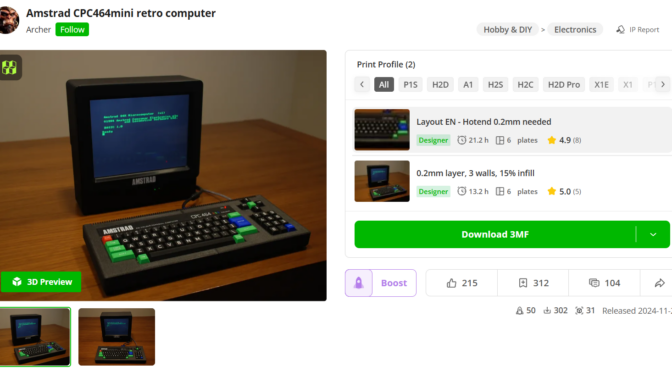
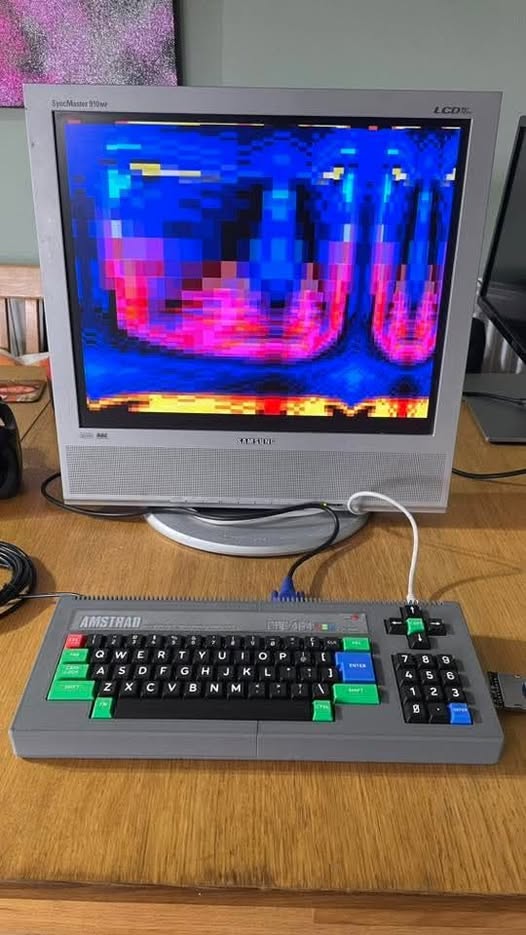
There is something especially pleasing about seeing an Amstrad CPC recreated in miniature, and even more so when it is not just a display piece but a proper working build. Simon recently 3D printed the CPC Mini based on Archer’s Amstrad CPC464 Mini design, a functional mini recreation of the classic machine that uses the CPCESP emulator.
From the outside, it has all the charm you would hope for:
It is instantly recognisable as a CPC
It has that distinctive shape and keyboard-first design
It will still make Amstrad fans smile!
But, as ever with projects like this, the real story is in the build. One of the biggest jobs was the keyboard. Simon said it took a lot of detailed soldering to connect all the keyboard wires, which gives you a good idea of how much patience went into getting this little machine working properly. Mini builds have a way of making every task feel fiddlier, and this one was no exception.
Of course, no hands-on retro project is complete without at least one moment of mild chaos! In this case, Simon managed to put the S on the keyboard the wrong way up. Thankfully, it did not escape notice for long. His partner Jo, also a founding member of UKAG, an Amstrad Action writer and journalist, spotted it. So the build now has one of those brilliant little stories that every good project deserves: the kind where everything is nearly perfect, apart from one rebellious keycap trying to start its own alphabet.
That is part of what makes builds like this so enjoyable. They are not just about the finished object. They are about the process, the problem-solving, the tiny details, and the moments that make you laugh afterwards.
A project like this is a tribute not only to the original Amstrad CPC464, but also to the creativity and enthusiasm that still surround the machine today. The MakerWorld model itself is described as a tribute to the 1984 original, recreated in a compact but functional format.
Simon’s finished CPC Mini is exactly the sort of thing UKAG exists to celebrate: a mix of technical skill, retro affection and the occasional upside-down letter.
You can see the CPC mini, plus more that Simon has done on this project, at our meetup in June! The tickets are selling fast, and with projects like this on display, it’s no wonder!